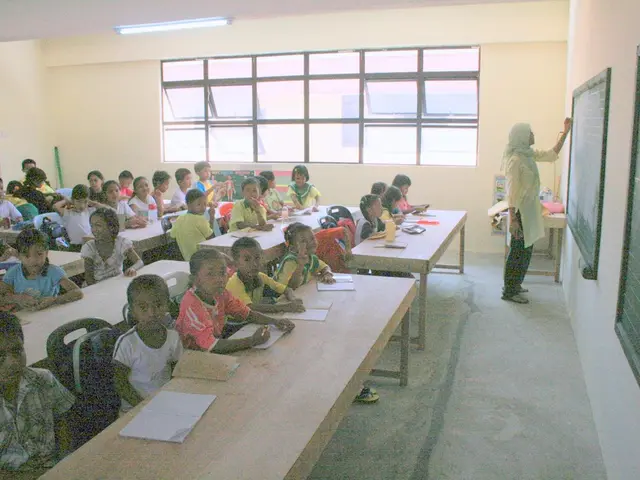

fifty-year milestone achieved: the celebration of our association's anniversary.
The 1970s marked a significant turning point for environmental awareness, leading to the creation of organisations such as the Environmental Protection Agency (EPA), National Oceanic and Atmospheric Administration (NOAA), Friends of the Everglades, and the Natural Resources Defense Council. This period also saw the adoption of the Convention on Wetlands, the establishment of the United Nations Environment Programme (UNEP), and the first Earth Day, which brought teach-ins and demonstrations to protect air, water, and nature.
Fast forward to 1977, the Tbilisi Conference shaped environmental education for decades, emphasising the importance of integrating education into all aspects of society for sustainable development. The association being referred to, founded in 1971 by a group of community college educators, has been at the forefront of these transformations.
In the 1980s and 1990s, the focus shifted from ecological concerns to sustainable development, with terms like "sustainable development" and the Brundtland Report emphasising the need for conservation alongside human development. The United Nations Conference on Environment and Development (Rio Earth Summit) in 1992 further underscored the importance of broad public participation, integration, and participation as fundamental for sustainable development.
From the 2000s to the present, environmental education has evolved to incorporate intersectionality and social justice, recognising how environmental issues intersect with race, class, gender, and other social identities. This shift acknowledges that marginalised communities often bear disproportionate environmental burdens. The transition from the Millennium Development Goals to the Sustainable Development Goals reflected a global commitment to social justice, equity, and inclusion alongside environmental targets.
The association's 50th Annual International Conference will take place virtually in October, with the theme "The Power of Connection." The Natural Start Conference will also take place online this summer from July 26-30. Registration for both conferences will open in May. Tiered pricing will be offered for the conferences to make them accessible for anyone who wants to attend.
The issues the association is dealing with have become more complex, global, and intersectional over time. The proverb that encapsulates this journey is, "The best time to plant a tree was 20 years ago. The next best time is now." As we look towards the future, there is a call for a total rethink of education systems in light of the global pandemic and racial reckoning, with a focus on learner-centered strategies, nature and community, civic engagement, early learning, environmental justice, and community-centered solutions.
References: [1] United Nations (1972) United Nations Conference on the Human Environment. Available at: [2] United Nations (n.d.) Sustainable Development Goals. Available at: [3] Convention on Wetlands (1971) Ramsar Convention on Wetlands. Available at:
- The association, pioneering since its establishment in 1971, has been instrumental in shaping the direction of environmental education, with its 50th Annual International Conference, themed "The Power of Connection," scheduled for October, emphasizing the importance of inclusion and accessibility.
- As the focus of environmental education evolves to encompass intersectionality and social justice, recognizing the disproportionate environmental burdens upon marginalized communities, conferences like the Natural Start Conference—slated for online delivery this summer—are becoming vital platforms for discussion and collaboration.
- Paralleling the intertwined nature of today's environmental concerns, the role of education transitions from the traditional confines of academia to embrace self-development, lifestyle changes, and the intersection of environmental-science with broader educational disciplines, such as education-and-self-development.